2die4 Live Foods - Our Products

Wholesale enquiries WELCOME!

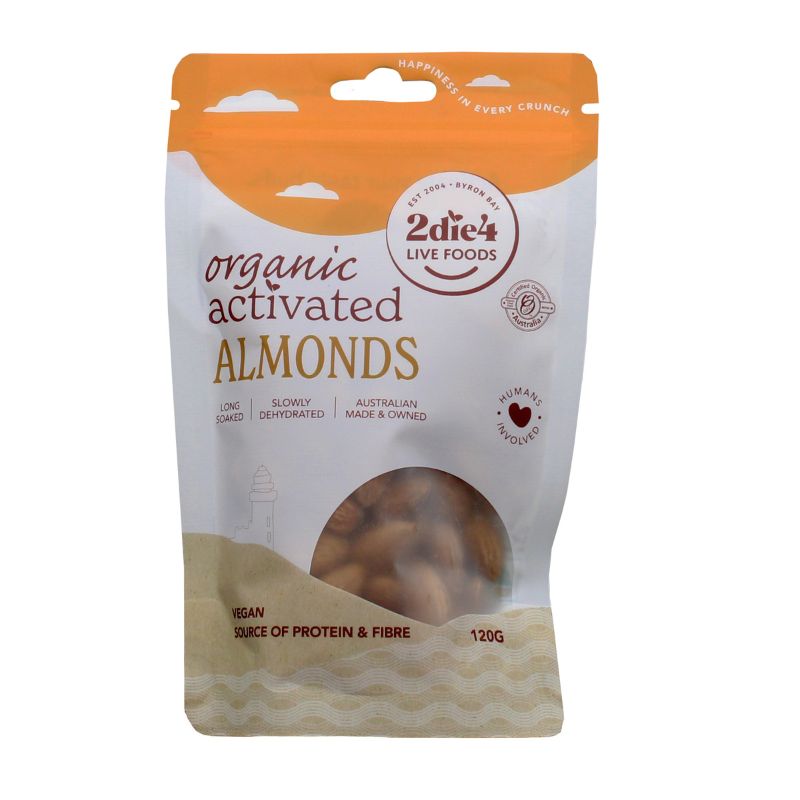
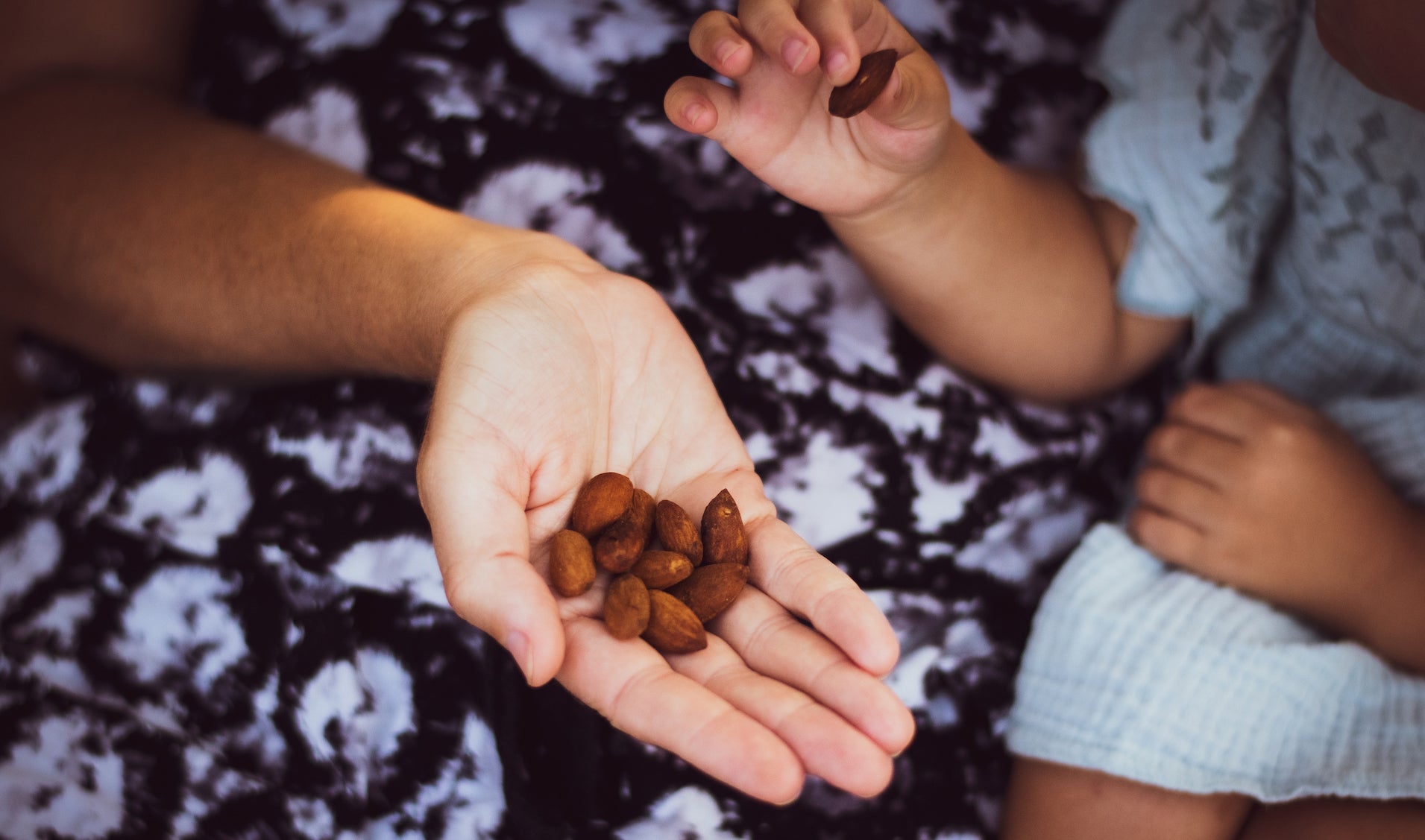
ACTIVATED ALMONDS
2die4's Activated Almonds are grown pesticide-free in Australia.

The Sweet Almond (prunus dulcis) figures prominently in the cuisines of nearly every Almonds 300gcountry in the Middle East and Mediterranean. While the trees are grown today around theworld, they most certainly originated in the Levant (SW Asia), where they are among the oldest known cultivated nut trees. European travelers of the Silk Road, including Alexander the Great, used almonds liberally as a highly transportable and nutritious food and brought them back to Europe at some point, where they are now grown as far north as Great Britain. The skins of almonds contain bioflavonoids. The 2die4 fermentation procedure renders the almond skins more digestible.

Click here for full Table of Nutrients


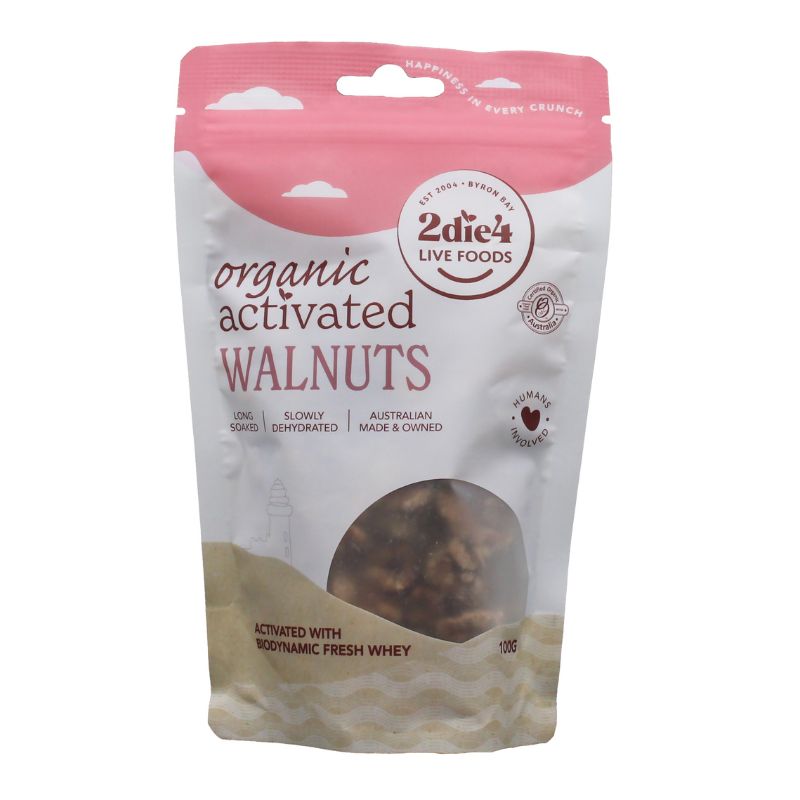
ACTIVATED WALNUTS
2die4's Activated Walnuts are grown in Australia.

Walnuts 300gBoth the nut and the beauty of the Walnut tree (juglans regia) were deemed a hallowed place by the Greek gods, and their ancient earthly Hellenic cuisine took the classic craft of food fermentation to an heavenly degree of sophistication. Shelled walnuts look very much like the two halves of a brain. It is for this reason that the ancient Greeks and Romans believed that walnuts cured headaches. The first walnut trees are believed to have been grown by the shores of the Caspian Sea and north India.

Click here for full Table of Nutrients


ACTIVATED PECANS
2die4's Activated Pecans are grown pesticide-free in Australia.

Pecans 300gThe Pecan Nut (carya illinoiseis) is a native of North America, the word “pecan” being of Algonquin tribal origin, meaning “nuts needing stone to crack”. Also known as “hickory” nut. In Europe, hazelnuts are also known as filberts, as they are ready for harvest on August 22nd, St. Philbert's Day. But they were known in China some 5000 years ago...and they were gathered by the Romans. Pliny, in fact, claims they originated in Damascus. The Chinese have a saying – “10 pecans a day = no stress”.

Click here for full Table of Nutrients


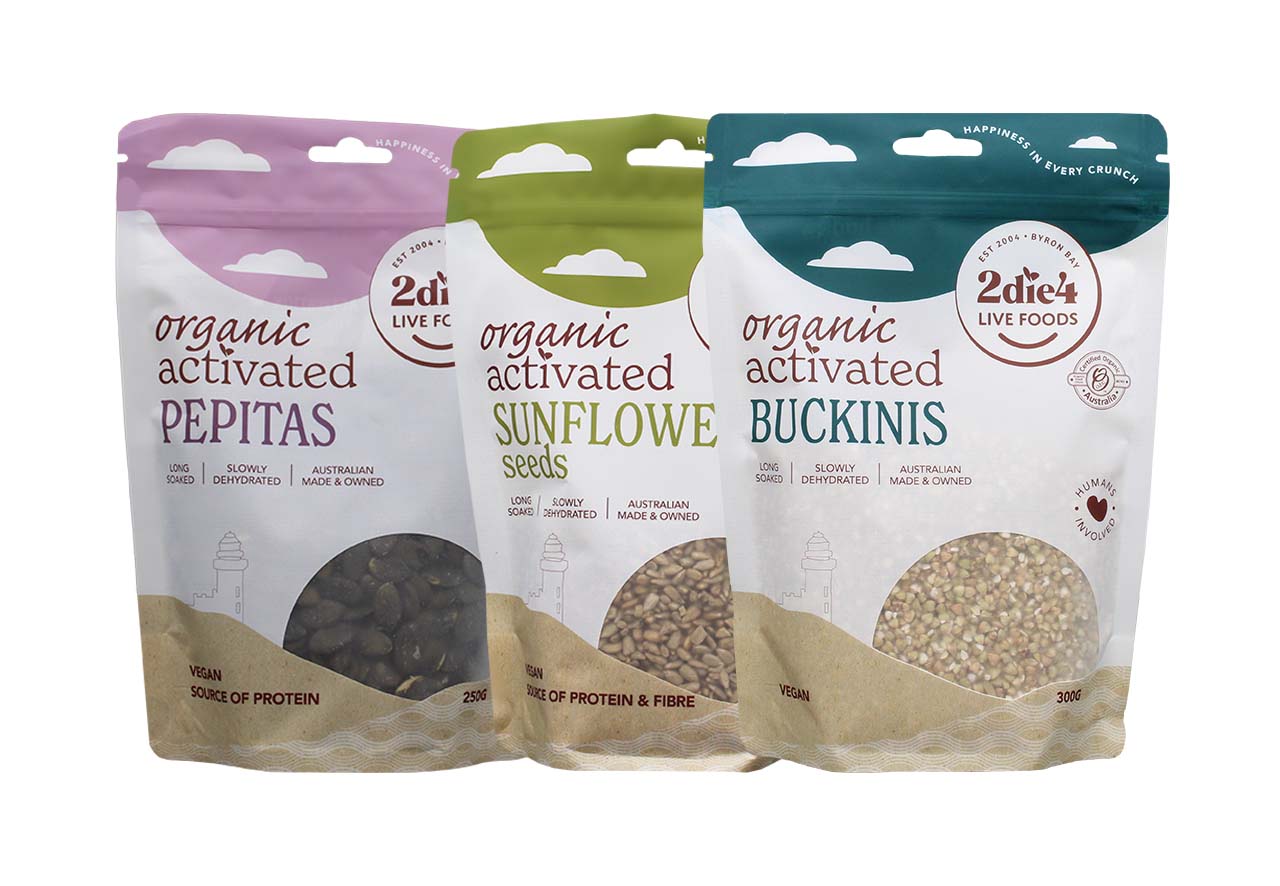
ACTIVATED PEPITAS
2die4's Activated Pepitas are grown organically in Australia (not certified).

Pepitas 100g2DIE4’s activated Pepitas (pumpkin seeds) are derived from a special pumpkin variety grown only for its seeds, which have no husk, only a fine membrane, hence require no heat treatment to extract. However, it is Mexico that has made pepitas (from squashes and cantaloupes also) such an integral part of a national cuisine.

Click here for full Table of Nutrients


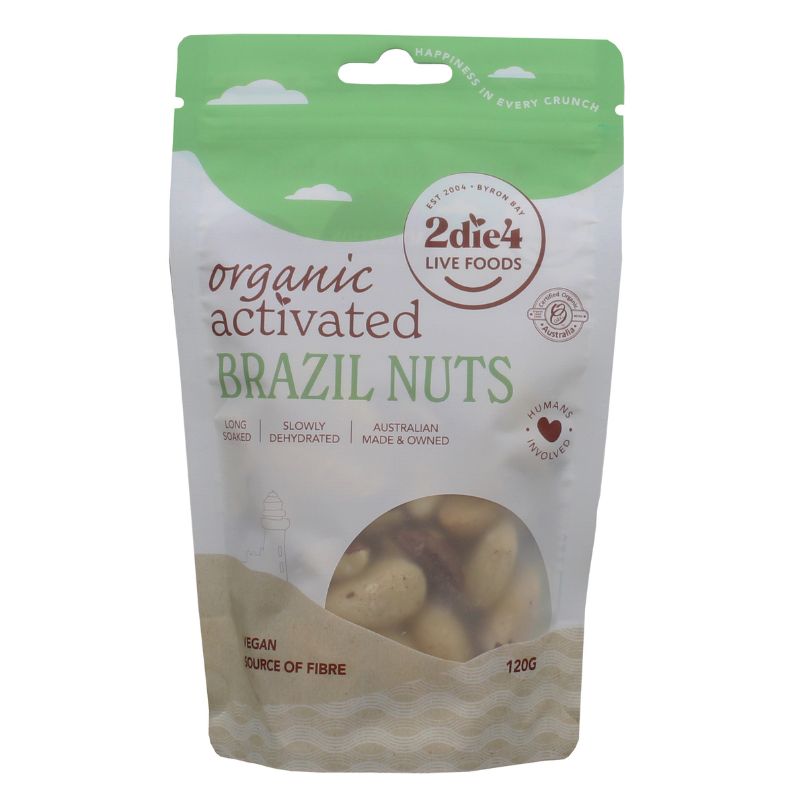
ACTIVATED BRAZILS
2die4's Activated Almonds are grown organically in Bolivia.

Pepitas 100gCertified OrganicThe Brazil nut tree (bertholletia excelsa) is an enormous tree, up to 70 metres high, and is native to the Amazon rain forests of South America. It will ONLY bear fruit in its wild habitat, as the tree needs the support of many jungle companion plants to blossom. The Brazil nut contains significant levels of selenium. The raw nut (seed) will burn like a candle.

Click here for full Table of Nutrients


ACTIVATED PISTACHIOS

Pepitas 100g
2die4’s Activated Pistachios are grown in Australia The Pistachio (Pistacia vera L) is related botanically to the Cashew and Mango. The tree is native to western Asia and Asia Minor and evidence has been found in this region that suggests the nuts were being used for food as early as 7,000 B.C. The trees grew wild in high desert regions and legend has it that lovers met beneath the trees to hear the pistachios crack open on moonlit nights for the promise of good fortune. Commercial growing of pistachios began in Australia in the 1980’s. Click here for full Table of Nutrients

ACTIVATED MIXED NUTS

Pepitas 100g
We had to create a Mixed Nuts pack because some clients were often in a tizz as to just which nut was their favourite.
Now they can enjoy 4 different Activated nuts in the one purchase.
2die4 Mixed nuts are a combination of equal proportions of 2die4 Activated walnuts, almonds, pecan and brazil nuts.

Please refer to the individual nuts for nutrient table.


VEGAN MIX

Vegan Mix
In responding to public demand, specifically to folk requiring a dairy-free, lactose-free (NO WHEY is used) product, 2die4 has created the VEGAN MIX.

Please refer to the individual nuts for nutrient table.


UMAMI THE FIFTH TASTE

In 1908, the UMAMI taste was first identified as one of the five basic tastes by Kikunae Ikeda of the Tokyo Imperial University while researching the strong flavour in seaweed broth. Ikeda isolated the amino acid, glutamic acid, as the chemical responsible. However, instead of exploring UMAMI in its natural forms, Ikeda synthesised glutamic acid as monosodium glutamate, or MSG, and with the help of the Ajinomoto company, Ikeda began commercial distribution of MSG products.

The action of the body’s UMAMI receptors explains why foods treated with monosodium glutamate (MSG) may often taste "heartier". But it’s just a trick of the taste, because the glutamate amino acid never naturally exists alone in food (as in MSG powder isolate), but rather always within a supportive chain of 18-20 different amino acids!

Why do people eat so many potato and corn chips?
I would suggest that it is due to the fake taste drug, the MSG used in the chip production. It’s artificially more-ish.

Happily though, we can enjoy this UMAMI sensation without the use of MSG.

UMAMI is one of the five basic tastes sensed by specialized receptor cells present on the human tongue. The same taste is also known as xiānwèi (traditional Chinese: 鮮味; simplified Chinese: 鲜味) in Chinese cooking.

UMAMI is a Japanese word meaning savoury, or “yummy”, a "deliciousness" factor deriving specifically from the taste sensation only certain foods exude. The key factor is the presence of the protein, or amino acid, glutamic acid, in the base food.

During the food’s processing, be it via cooking, fermentation or cheese-making, etc, specific reactions involving the natural glutamic acid magically creates the UMAMI taste, which is commonly found in certain meats, seafoods, cheeses, broth, stock and other protein-heavy foods.

In as much as it describes the flavour common to savoury products such as meat, cheese and mushrooms, etc, UMAMI is similar to Brillat-Savarin's concept of osmazome, an early attempt to describe the main flavouring component of meat as extracted in the process of making stock.

Naturally-occurring glutamate has a long history in cooking: It appears in foods such as soy sauce and fish sauce, kombu, seaweed, katsuobush/dried bonito flakes, niboshi/small dried sardines, mackerel, tuna, cod, prawns, squid, oysters, shellfish, beef, pork, chicken, tomatoes, shiitake mushrooms, enokitake mushrooms, truffles, potatoes, sweet potatoes, Chinese cabbage, carrots, green tea, parmesan and blue-vein cheeses, anchovies, and now, it seems, in 2die4 activated nuts and seeds.


Wholesale enquiries WELCOME!

2die4 Live Foods • Unit 1 / 71 Banksia Dv • Byron Bay • NSW 2481 • Australia • Phone / Fax +61 2 66809411